
If your shoes could talk, what would they say? They would tell where you have walked and who you have been willing to walk alongside.
If your hands could talk, what would they say? They would testify to how you have served, comforted, and extended the love of Christ beyond words.
If your church walls could talk, what would they say? They would testify to what is welcomed inside—love, prayer, hospitality, or indifference.
If your car could talk, what would it say? It would reveal where you go, who you make time for, and what matters enough to pursue.
This reflection draws on a familiar homiletical metaphor. In many ways, this is how evangelism is revealed. Long before we speak, our lives bear witness, reminding us that our attitude and actions give our efforts purpose and significance. In every season of the church, there is a necessary tension between accountability and faithfulness. Structure matters. Order matters. Yet experience has taught me that forms, reports, and processes are important, but can never fully measure the posture with which evangelism and missions are lived out. In this moment, when our churches face complex realities and growing needs, posture matters as much as the process. Process is what we do, and posture is how we do it—and why. Posture shapes whether the process becomes life-giving or lifeless.
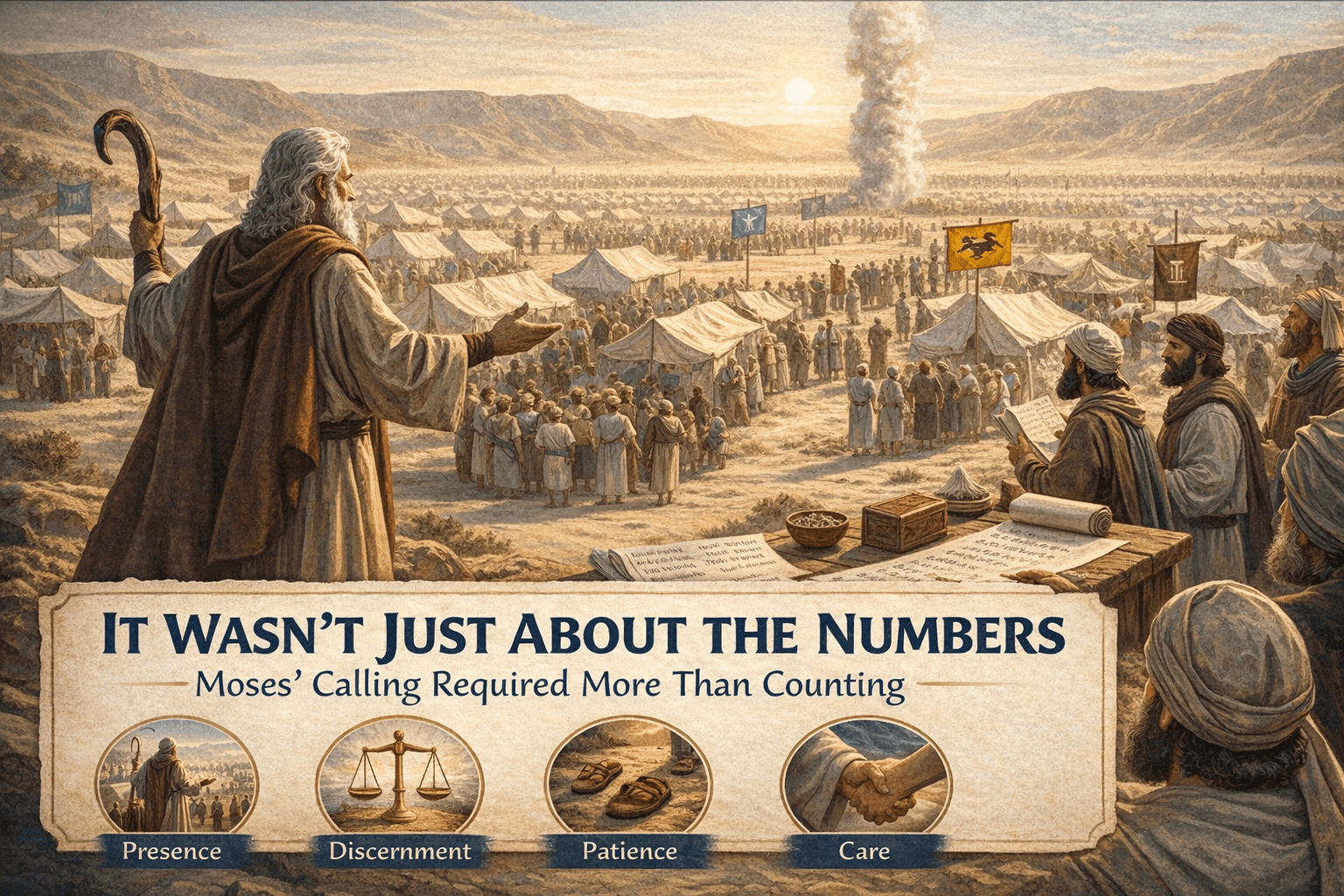
When I reflect on the censuses in Numbers 1–2 and Numbers 26, I am reminded that counting the people was necessary for reporting purposes, but it was not the whole assignment. God did not ask Moses to count Israel in order to reduce them to numbers. The census was about stewardship. Moses was responsible for real people, real families, and real lives, and counting helped him carry that responsibility faithfully. Moses was leading so many people that it was impossible for him to remember every face or detail. To ensure no one was overlooked, the people had to be organized, counted, and grouped. But even in that, we see that the census did not define Moses’ faithfulness. It was not just about the numbers. Moses’ true calling required much more: it required presence with the people, discernment in decision-making, patience in the journey, and care for each individual that God had entrusted to him.
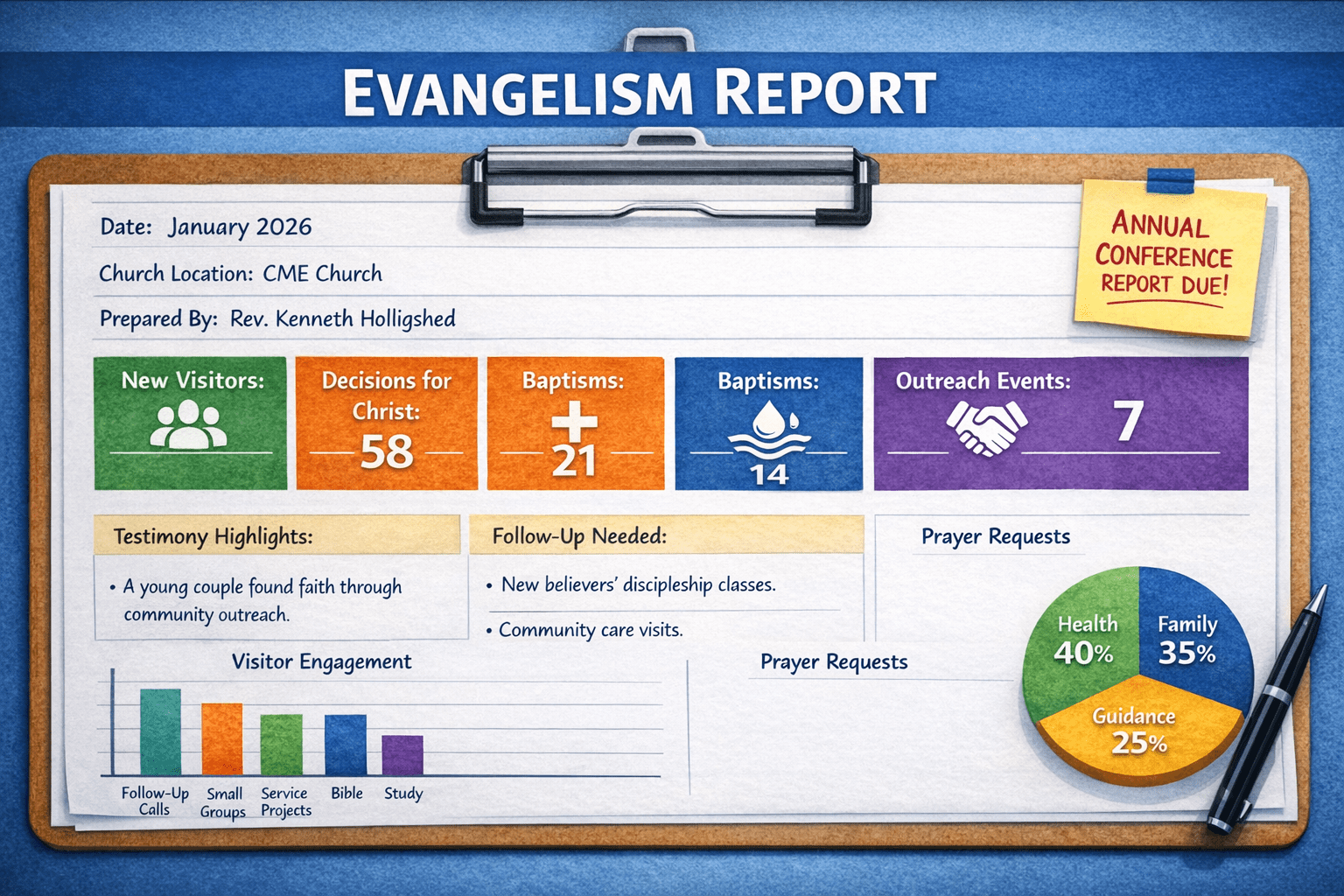
The church today lives within a similar tension. We are constantly submitting reports, and in most churches, required forms play a crucial role in maintaining accountability. In the Christian Methodist Episcopal Church, reports are submitted for church conferences, quarterly conferences, annual conferences, and the general conference. These often include updates on evangelism, attendance, baptisms, new members, and various ministry activities. When I give my brief evangelism report as the Evangelism Director, it reflects the work being done locally in my church, highlights other churches’ evangelism efforts in the region, and offers recommendations intended to strengthen evangelism across the state.
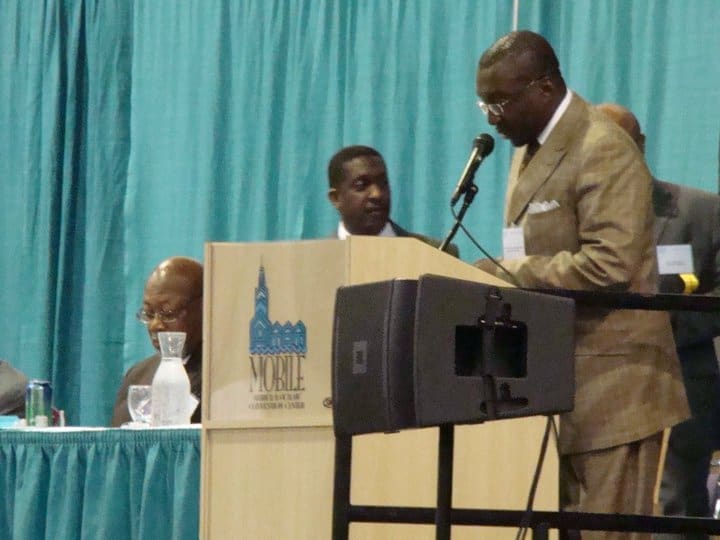
Presenting as the Chair of Evangelism and Spiritual Life Standing Committee at the CME General Conference in 2014
I am always encouraged to see local churches put my recommendations for evangelism and outreach into practice, because I honestly believe these tools have value when used faithfully. Reporting provides accountability and helps us recognize patterns across the connection. Yet they cannot tell the whole story. A report may show that evangelism took place in a church, but it cannot reveal whether relationships were built, trust was earned, or dignity was upheld. Forms can capture activity, but they cannot measure posture.
Our spiritual life is essential. In his book, The Spirit of the Disciplines: Understanding How God Changes Lives, theologian Dallas Willard reminds us that spiritual life is not sustained by external activity alone. Willard highlighted that spiritual formation matters more than performance, and that faithfulness is shaped from within, not outwardly. In other words, this means evangelism cannot be reduced to what is done, recorded, or reported. It must be established in spiritual formation that shapes how leaders see people, carry responsibility, and stay attentive to the work God is doing beyond what can be measured.
Over the years, I have observed that some of the most faithful evangelism happens quietly, consistently, and relationally. It does not always translate neatly into numbers or categories. However, systems, processes, and expectations can influence evangelism activity, sometimes leading to increases around reporting deadlines, not because spiritual growth has occurred, but to check off a list or meet the deadline. This is not a judgment, but a reality shaped by external factors. The question before us is not whether reporting should exist, but whether our posture toward evangelism and missions is shaped primarily by forms or by faithfulness.
Evangelism begins with relationships. Many people are leery of institutions but still love God. They carry church hurt, skepticism, and/or exhaustion. They are navigating spiritual uncertainty, economic instability, health challenges, and broken social connections. Therefore, evangelism requires more than a revival, programs, and documentation. It requires leaders and congregations who are actively listening, understanding, and are willing to show up, even when no immediate results are visible. Consider practical ways to practice this posture, such as personal outreach, listening sessions, and consistent presence in the community.
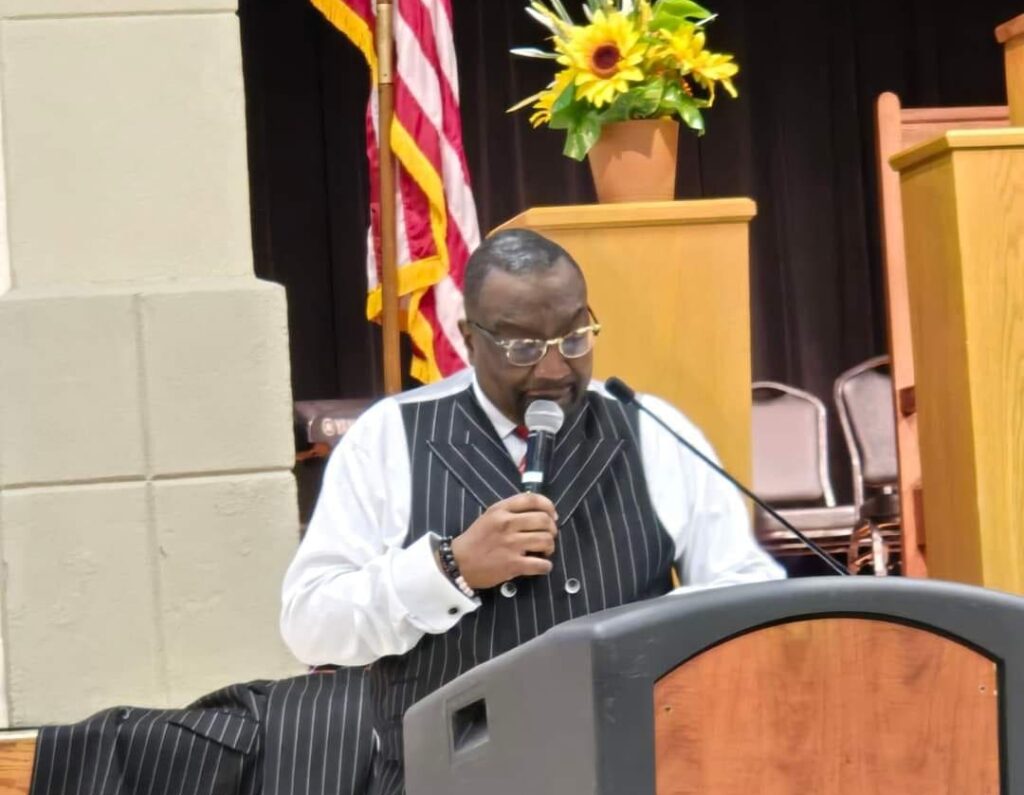
Presenting at the East Texas Region Annual Conference in 2024
This is where posture matters more deeply for leadership. Over time, I have come to realize that posture influences how we show up in our communities, nurture leaders, and even measure success in ministry. When leadership is shaped by faithfulness, priorities shift. People take precedence over performance, and genuine presence becomes more important than appearances. It also helps leaders feel trusted and appreciated as they build genuine relationships and respond with compassion.The posture of leadership also determines how evangelism and missions are sustained during seasons of challenges or uncertainty. Across the church, many congregations are navigating pastoral shortages, transitions, and limited resources.
In times like these, it can be tempting to slow down evangelism and outreach until things feel more stable. Yet the mission of the church was never meant to pause just because we pause. Faithful posture keeps evangelism moving forward, not always through highly visible efforts, but through empowered laity, collaborative leadership, and steady presence in the community. Leaders should feel encouraged that faithful effort builds resilience and trust, even in difficult seasons. Reports should serve the mission, not replace it. Reports are tools for accountability, but should never replace the deeper mission of evangelism and discipleship.
Moses demonstrated strong leadership that continues to give us wisdom today. When the people were counted, his responsibility did not pause; it became even clearer. Accountability helped him steward what had been entrusted to him. Rather than reducing leadership to numbers alone, Moses modeled how accountability can deepen responsibility and care. We need leaders like Moses, those who balance accountability with compassion, and who recognize that evangelism and missions are not sustained by reports alone, but by spiritual formation and a genuine posture of care for people.
As we continue to reflect on the work of evangelism and missions, I want to ask you honest questions: Are your structures serving your calling? Are your reports reflecting reality or shaping it? Are you forming disciples, or simply managing activities? These certainly are not questions of criticism, but of discernment. It calls us to lead with a posture that honors both the mission and the people God has placed in our care. If posture matters as much as processes, the question becomes how we cultivate that posture in our daily lives and in our leadership. Evangelism is not sustained by methods alone, but by the spiritual habits and dispositions we practice over time. The following six tips are not prescriptive formulas but ways that leaders can align their posture with faithfulness, attentiveness, and steady commitment in the work of evangelism.
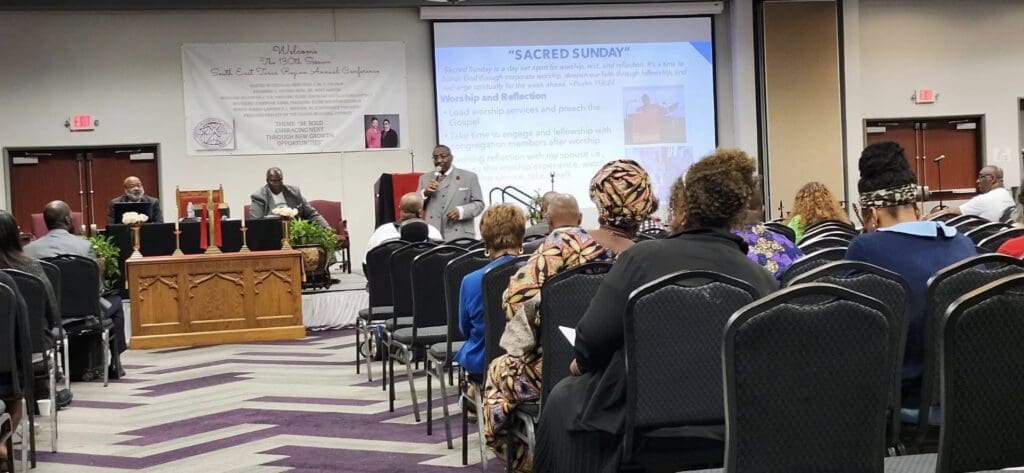
Presenting at the Southeast Texas Region Annual Conference in in 2024
Tip 1: Reflecting Beyond the Report: Leaders should pause and reflect carefully on the relationships built, the people served, and the sacred moments not written in a report. When reporting is treated this way, it replaces the deeper work of faithful ministry. 1 Corinthians 4:2 (NIV) says, “Now it is required that those who have been given a trust must prove faithful.”
Tip 2: Faithful Consistency in Evangelism: Faithful evangelism is often sustained through consistency rather than visible moments. Posture in leadership is shaped by presence, relationship-building, and continued engagement even when outcomes are not immediately measurable. Galatians 6:9 (NIV) says, “Let us not become weary in doing good, for at the proper time we will reap a harvest if we do not give up.”
Tip 3: The Power of Listening in Evangelism: A posture built on faithfulness prioritizes listening before action. Effective evangelism takes shape when leaders and congregations take time to understand the lived realities of their communities, allowing outreach efforts to emerge from genuine knowledge, trust, and contextual awareness rather than assumption. James 1:19 (NIV) says, “My dear brothers and sisters, take note of this: Everyone should be quick to listen, slow to speak and slow to become angry.”
Tip 4: Empowering Leaders for Lasting Impact: Faithful leadership invests in people. Evangelism is strengthened when the people of God are equipped, trusted, and empowered to serve, as this ensures the mission continues through shared responsibility rather than dependence on a single leader. Ephesians 4:12 (NIV) says, “to equip his people for works of service, so that the body of Christ may be built up.”
Tip 5: Attentiveness in Evangelism: Posture-centered leadership remains attentive to both those who are absent and those who are present. Faithful discernment considers who may be overlooked, unheard, or disconnected, and seeks to respond with care, compassion, and intentional engagement. Luke 15:4 (NIV) says, “Suppose one of you has a hundred sheep and loses one of them. Doesn’t he leave the ninety-nine in the open country and go after the lost sheep until he finds it?”
Tip 6: Grace-Filled Accountability in Evangelism: Faithfulness beyond the form approaches accountability with grace. Leaders recognize that transparency and responsibility are most effective when they encourage honesty, learning, and shared growth rather than comparison or competition. Ephesians 4:15 (NIV) says, “Instead, speaking the truth in love, we will grow to become in every respect the mature body of him who is the head, that is, Christ.”
These practices remind us that faithfulness in evangelism and missions cannot be reduced to what is reported, counted, or summarized. Forms and processes serve an important purpose, but they are not the measure of our calling. Scripture consistently points us toward a standard—faithfulness shaped by stewardship, presence, perseverance, humility, and love. The church is called to lead in a way that honors accountability, never losing sight of people and structure, while remaining anchored in compassion. As we reflect on the work of Evangelism and Missions today, I pray that you will think carefully about what you do, how you do it, and why it matters. Faithfulness beyond the form calls us to steward the Gospel with integrity, to care for those entrusted to us, and to remain committed to leadership that is relational, life-giving, and rooted in Christ. While reports may help us count the people, it is faithful posture that enables us to shepherd them well.
Calls to Action:
- Reflect on Posture: Take time to prayerfully reflect on how evangelism and missions are being lived out in your context, not only through reports and activities, but through relationships, presence, and care for people.
- Lead Beyond the Forms: As you complete your reports and engage in accountability processes, let them prompt deeper reflection on faithfulness, stewardship, and the people God has entrusted to your care.
- Strengthen Relational Evangelism: Commit to cultivating evangelism that is consistent, relational, and built on listening and meeting people where they are with humility, compassion, and patience.
- Equip and Empower Others: Identify ways to invest in and equip lay leaders and ministry teams so that the work of evangelism and missions is shared, sustainable, and strengthened across the whole body.
- Pray for Faithful Leadership in This Season: Join in prayer for the church, its leaders, and all who are discerning how best to serve in this season, asking God to shape our posture so that our witness remains faithful, life-giving, and centered in Christ.
References
Willard, Dallas. The Spirit of the Disciplines: Understanding How God Changes Lives. San Francisco: Harper & Row, 1988.