


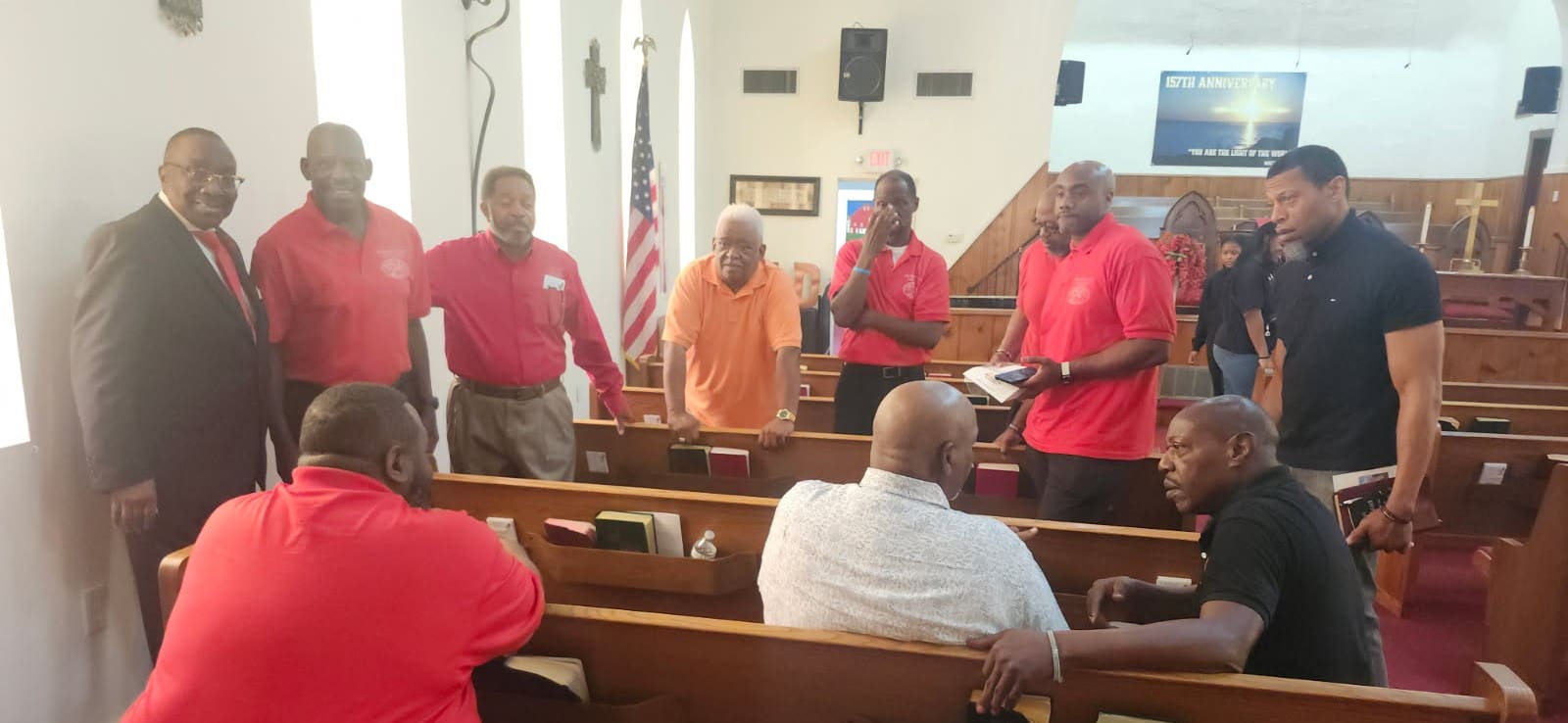
Over the past thirty years, I have witnessed a concerning decline in church engagement among Black men. Most men are not absent because they do not believe in God, but because they have not encountered a ministry that speaks to their identity, struggles, or purpose. This challenge is not new. Scholar Jawanza Kunjufu, in his book Adam! Where Are You? observes that many Black men disconnect from the Church not because of apathy toward God but because they feel the Church does not speak to their lived realities, their responsibilities, or their inner battles. His insight reminds us that if the Church is going to reach men in the twenty-first century, we must understand the pressures men carry and intentionally build ministries that restore identity, purpose, and dignity. Reaching Black men today requires renewed vision, fresh strategies, and a compassionate understanding of the emotional, social, and spiritual weight they shoulder each day.
Each November, our congregation pauses to honor the strength, resilience, and leadership of the men who serve our church and community. Yet as we celebrate those present, my heart also turns toward the brothers who are missing in action. Men matter deeply to God. Men matter to me, and they matter to the Church. Still, churches nationwide are facing an undeniable reality: studies show that men consistently participate in worship, prayer, and other faith practices at significantly lower rates than women (Pew Research Center 2016).
 Today’s men navigate a cultural landscape that is more complex and demanding than any we have seen in previous generations. Many live beneath unspoken expectations to be strong without stumbling, silent without breaking, unshakeable without support, and endlessly self-sufficient even when overwhelmed. These pressures create an emotional and spiritual weight that often goes unnoticed in their families, society, and in the Church. By recognizing and confronting the following challenges, we have an opportunity to develop new strategies that uplift Black men and help them find their true strength and purpose in the Church:
• Systemic racism: From education to employment to healthcare, Black men often confront institutional barriers that quietly limit opportunities and reinforce negative stereotypes. When the Church understands these pressures, outreach can become a ministry of justice, advocacy, and restoration that helps create safe environments.
• Disproportionate economic hardship: Black men continue to face wage gaps, limited access to generational wealth, and fewer economic opportunities. Many feel heavy pressure to provide for their families despite systems that undermine their financial stability.
• Over-policing and mass incarceration: Black men are policed, arrested, and incarcerated at a much higher rate than other races, not because of higher criminality, but because of inequitable systems. This creates fear, trauma, and lifelong obstacles even for those who have never been in prison.
• Generational trauma: Black men have dealt with unresolved pain for centuries from slavery, segregation, discrimination, and family fragmentation. It has been passed down generationally, emotionally, spiritually, and behaviorally.
• The myth of Black men: Society often portrays Black men as angry, dangerous, criminal, thugs, lazy, unemotional, and promiscuous. This myth discourages vulnerability, silences mental health struggles, and makes it difficult for men to seek help. The church has a responsibility to be a safe space to dismantle these stereotypes. By doing so, the church must be a welcoming space where Black men can feel secure enough to be their authentic selves and receive the emotional and spiritual support they need without judgment.
These barriers collide to form what scholars describe as “the double burden”: the expectation to succeed in systems that are not designed for our success, while simultaneously carrying the responsibility to protect, provide, and persevere without complaining. Psychologist Dr. Na’im Akbar identifies this with striking precision: “The crisis of the Black male is fundamentally a crisis of identity.”
This crisis is not simply about who we are as men, but about who we have been told we are not:
not allowed to be weak,
not allowed to be vulnerable,
not allowed to cry,
not allowed to have spiritual questions.
Anytime a Black man’s identity becomes distorted, his purpose becomes blurred. When purpose becomes blurred, connection becomes fragile. This is why many men withdraw from community, relationships, and the Church. Most of the time, it is not out of their rebellion, but out of exhaustion, confusion, or silence.
Why Men Drift From the Church
I have been blessed to pastor many powerful men throughout my pastoral ministry, and found that those who are missing in action are not rejecting God; they are searching for spaces where the weight of providing, leading, healing, and surviving can be lifted long enough for them to encounter Christ. In fact, I have pastored many women who shared their concerns about their husbands not attending church with them. After years of listening, counseling, and observing, I learned several core reasons consistently emerge:
1. Unhealthy Behaviors: Oftentimes, culture pushes men toward unhealthy extremes, such as emotional suppression, anger, escapism, or numbing through work, substances, or distractions. These behaviors do not come from a lack of faith but often come from a lack of safe environments to process pain.
2. Emotional Isolation: Some men suffer silently from loneliness. Research consistently shows that men have fewer close friendships than any other demographic. Without meaningful brotherhood, men often carry their burdens alone.
3. Lack of Support: Many men live under enormous expectations to provide financially, lead spiritually, solve family problems, and “hold everything together.” Yet few have mentors, role models, or spiritual guides who walk with them.
4. Distrust of Institutions: Many men struggle to trust institutions, including the Church, because they have witnessed or experienced inconsistency, hypocrisy, and hurt. National scandals, political divisions, and leaders who fail to model integrity have deepened skepticism. For generations, Black men have relied on the Church as a refuge and moral compass, but when actions contradict values, disappointment grows into quiet withdrawal.
5. Purpose Displacement: Beneath all the layers, many men quietly wrestle with purpose. They ask: “Where do I belong? What am I here to do?” When men do not see how their gifts connect to ministry or when their identity feels unclear, church involvement can feel irrelevant.
These struggles create a quiet storm within men, a heavy, unspoken internal battle over masculinity, identity, and worth in a world filled with conflicting messages. I am reminded of the story of Kunta Kinte in Alex Haley’s Roots, which illustrates the battle for identity. Though no one is physically stripping our names today, Black men are constantly being renamed by society as “angry,” “aggressive,” “absent,” or “unworthy.” Thus, the fight to hold on to one’s identity continues today. Rev. Dr. Thema Bryant-Davis, psychologist, author, and minister, said, “The ways you have learned to survive may not be the ways you wish to continue to live.” When a ministry offers safe spaces for healing, confession, and brotherhood, men can begin to lay down old survival mechanisms and embrace the fullness of who God designed them to be. Howard Thurman described it well: “There is something in every man that waits and listens for the sound of the genuine in himself.” Evangelism must help men hear that sound again.
Why Men Need Evangelism, and Why Evangelism Needs Men
 A church without men loses more than attendance; it loses structural strength. In the architecture of ministry, men often serve as beams and load-bearing walls. Throughout Scripture, God raised up men as builders of nations:
- Abraham built altars.
- Moses built justice.
- Joshua built courage.
- Nehemiah built walls.
- Peter and Paul built the early Church.
Evangelizing men requires a culture that restores dignity, disarms shame, and builds brotherhood. As we talk about the wounds men carry, we must also acknowledge a truth we rarely speak aloud: male pastors carry wounds too. Many of us shepherds who are called to heal others are serving while hurting, leading while lonely, and encouraging others while quietly drained. To reach men effectively, we must also recognize the emotional and spiritual weight carried by the leaders who serve them.
Pastoring Through Personal Pain: Bearing Weight While Carrying Wounds
Male pastors are certainly not exempt from experiencing pain in profound human ways. While we labor as builders in God’s house, we also carry the realities of our own lives, health concerns, aging parents, sick spouses, marital stresses, financial pressures, personal losses, and moments when grief knocks the wind out of us.  Ministry does not pause when life hurts. Pastors do not get to step away when life hurts. Ministry keeps going, even when we are tired or wounded ourselves. That is one of the hardest truths about this calling: sometimes we are still tending the flock while dealing with our own limp. Some might call it a “thorn in the flesh,” like the apostle Paul described in 2 Corinthians 12. It is a weakness that does not disqualify us as pastors but instead becomes the place where God’s strength is made perfect.
For most of my ministry, I was taught to “never share your personal struggles, people will use it against you.” That warning, passed down by older pastors, was meant to protect us, but it also created a silent burden. When pastors feel they cannot trust anyone with their pain, that vulnerability itself becomes another source of stress. It creates a fear that transparency will be weaponized, that honesty will be misinterpreted, or that sharing a struggle will open the door for criticism, sabotage, or disrespect. As a result, many preachers retreat into isolation. They build walls around their hearts instead of letting others help reinforce the beams holding their soul together.
Isolation is one of the most dangerous places for a pastor to live. Internalized pain becomes like hidden cracks in the foundation, unseen but steadily widening. Cracks left unaddressed can lead to emotional exhaustion, spiritual numbness, relational breakdown, and even serious health problems. That is why pastors need to have pastors, mentors, counselors, or trusted spiritual companions of their own.
Even builders need someone who understands the blueprint. Even shepherds need someone to tend their wounds. Pastors need safe and sacred places to land where they can speak freely, cry honestly, confess struggles, and process the weight of ministry without fear of judgment or betrayal. Seeking help does not make a pastor weak; it makes them wise. A healthy leader is necessary for a healthy church.
A Blueprint for Evangelizing Men
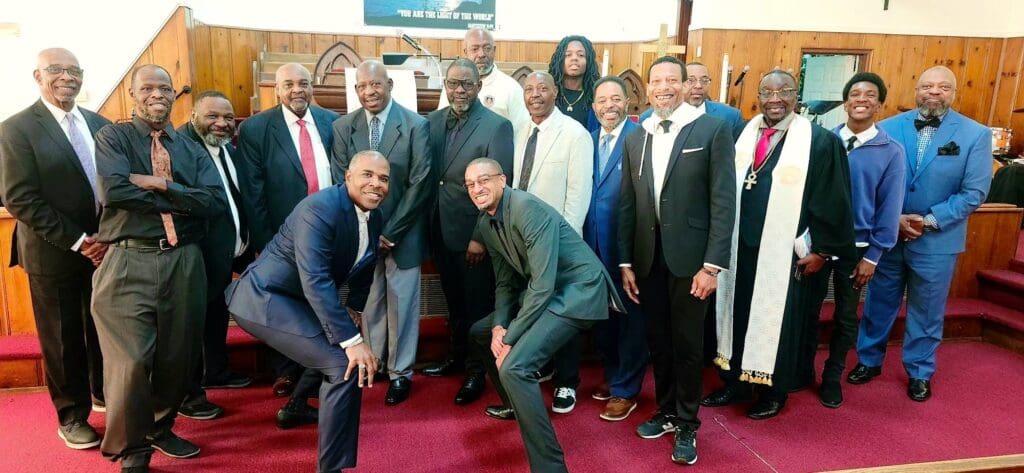
Just as no carpenter builds without a plan, the Church cannot reach men without an intentional blueprint.
1. Build a Ministry Men Can Respect, Not Just Attend: Men follow clarity, purpose, challenge, and structure. Give men meaningful work, projects, leadership, and responsibility.
2. Prioritize Brotherhood Over Attendance: Men may visit because they were invited, but they stay because they belong. Brotherhood is evangelism.
3. Preach to the Wounds Men Carry Silently: Every man has a public story and a private one. Speak to the questions and pain men are afraid to say aloud.
4. Empower Men Through Purpose, Not Pressure: Men avoid failure, not God. Purpose restores identity and awakens calling.
5. Create Entry Points That Fit Today’s Reality: Evangelism must go where men are. Men may not enter a sanctuary first, but they will enter:
- a barbershop conversation
- a football watch party
- a men’s health screening
- a financial literacy seminar
- a community service project
- a career workshop
6. Let Men Build Something: When men put their hands to work, their hearts follow.
7. Show That Strength and Spirituality Belong Together: Teach men that true strength is found in Christ and courage is found in confession.
8. Minister in Ways Modern Men Can Receive: Men respond to messages that are direct, practical, purpose-driven, challenging, and honor-giving.
Evangelizing men today is not about guilt; it is about offering them a structure where they can grow. They return, they stand, they disciple others when they find:
- a purpose to pursue
- a brotherhood to belong to
- a mission to build
- a God who restores identity
Evangelism is not simply inviting men to church. It is inviting them to rebuild their lives through Jesus Christ.
Call to Action
Start a Monthly Men’s Fellowship: Create a safe space for growth, truth, and brotherhood.
Launch a Men & Boys Health Month: Address physical, emotional, and mental wellness with intentional outreach.
Start a Men’s Bible Study: Real talk. Real faith. Real accountability, right where men gather.
Empower Men to Lead a Service Project: Let men put their hands to work; their hearts will follow.
Develop a Men’s Mentoring Program: Connect seasoned men with younger men for wisdom, accountability, and leadership development.
Reference
Akbar, Na’im. 1991. Visions for Black Men. Tallahassee, FL: Mind Productions & Associates.
Bryant-Davis, Thema. 2021. Homecoming: Overcome Fear and Trauma to Reclaim Your Whole, Authentic Self. New York: TarcherPerigee.
Haley, Alex. 1976. Roots: The Saga of an American Family. Garden City, NY: Doubleday.
Kunjufu, Jawanza. 1992. Adam! Where Are You? Why Most Black Men Don’t Go to Church. Chicago: African American Images.
Pew Research Center. 2016. The Gender Gap in Religion Around the World. Washington, DC: Pew Research Center.
https://www.pewresearch.org/wp-content/uploads/sites/20/2016/03/Religion-and-Gender-Full-Report.pdf.
Thurman, Howard. 1980. The Inward Journey. Richmond, IN: Friends United Press.