

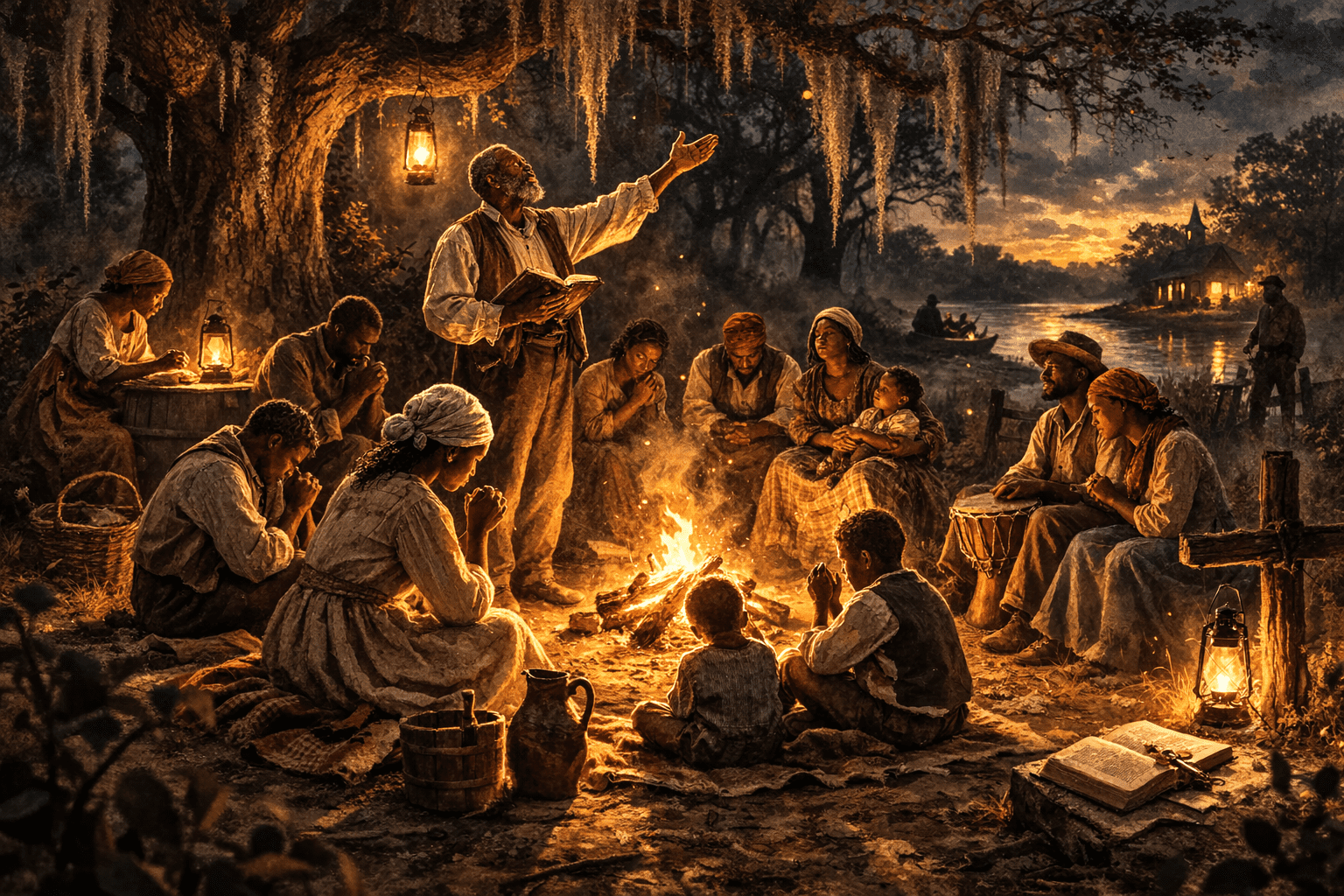
As Black History Month comes to an end, I recognize that evangelism in the Black Church has always ministered to the whole person—mind, spirit, body, and community. Historically, our faith was never confined to Sunday mornings; it spilled throughout our daily lives. Our ancestors’ survival formed their theology. Their songs became sermons and, at times, coded messages. Some scholars describe this as a form of hidden communication known as coded spirituals, those sacred songs created by enslaved Africans in America. I enjoy spirituals because they are powerful and carry secret messages of freedom. For example, the song “Wade in the Water” was understood to have warned those fleeing slavery to move through water to avoid dogs tracking them:
Wade in the water
Wade in the water, children
Wade in the water
God’s gonna trouble the water
“Follow the Drinking Gourd” is believed to have provided directional guidance toward the North Star. The “drinking gourd” refers to the Big Dipper, a constellation that served as a heavenly map for enslaved people.
Follow the drinking gourd
Follow the drinking gourd
For the old man is a-waiting for to carry you to freedom
If you follow the drinking gourd
“Steal Away” is commonly associated with Wallace Willis, an enslaved man in the 1800s, that was interpreted as a quiet signal for secret meetings in hush harbors or, in some accounts, for escape:
Steal away, steal away
Steal away to Jesus
Steal away, steal away home
I ain’t got long to stay here
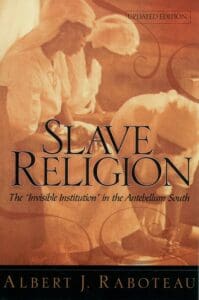 Many of these interpretations are commonly shared in cultural history, and historians note that documentation from the slavery era is limited, and some meanings are based on later accounts. In Albert J. Raboteau’s book, Slave Religion: The “Invisible Institution” in the Antebellum South, he explains how enslaved Black believers regularly gathered for worship in the secrecy of their quarters, groves, or hush harbors that established spaces where they could express and shape their faith apart from white enslavers.
Whether believers gathered in hush harbors, praise houses, wooden chapels, or established Black churches, evangelism was embodied as both proclamation and construction grounded in community. It built people when society tried to break them. It built families, courage, leadership, and hope. It created a sense of belonging where the oppressors built walls. Inside these sacred spaces, the gospel was not just spoken, it was lived, sung, prayed, and practiced. Black History Month is a time for us to remember more than historical dates, names, and events. It challenges us to remember our ancestors and their good fight of faith, and to reflect on how our faith was formed, sustained, and handed down through generations, often through the Black Church’s leadership in social justice.
For many of us, our earliest understanding of God, community, leadership, and evangelism was born in the Black Church, which has shaped so many of us. Long before evangelism had programs, metrics, or strategies, evangelism had people standing boldly for freedom and equality. It had a faith that would not die, even under oppression. Evangelism was built according to a divine blueprint grounded in Scripture and should never be reduced to church politics, events, or activities.
With my background as a trained architectural engineer, I think about evangelism in terms of structure—one that cannot be theoretical, performative, or confined to one space. Like our ancestors, evangelism must function in everyday life. Evangelism is the heartbeat of the Church; it is what brings life. Its steady spiritual rhythm should pulse through our daily lives. It must matter, welcome all, and transform lives. In the Black Church, evangelism was never confined to Sunday worship; it extended into the fields and served as a refuge, a strategy, and a sacred space. There, faith laid the foundation, wounded lives were restored, broken systems were confronted, and the community was strengthened from the ground up.
The Black Church has been one of the few institutions where African Americans could safely gather. When our identity was snatched away by the enslavers, the Black Church shaped our identity, strengthened our resilience, and gave us a deep sense of belonging. Even under the pressure of systemic racism and economic disparity, the Black Church did more than offer hope; it restored our dignity and gave us somewhere to stand with boldness.
Even today, leaders are being developed to organize meetings in fellowship halls, plan voter registration drives, and build ministries that support the community. The church reminds us of who we are when society tries to tell us we are less. That same spirit of organized leadership did not stop at the church doors. It showed up in other structured spaces within our community. Although I am not a member of a Greek-letter organization, I grew up in Fort Valley, Georgia, home of Fort Valley State University, an HBCU. It was a town where Black Greek life was woven into the fabric of both the community and the Black Church.
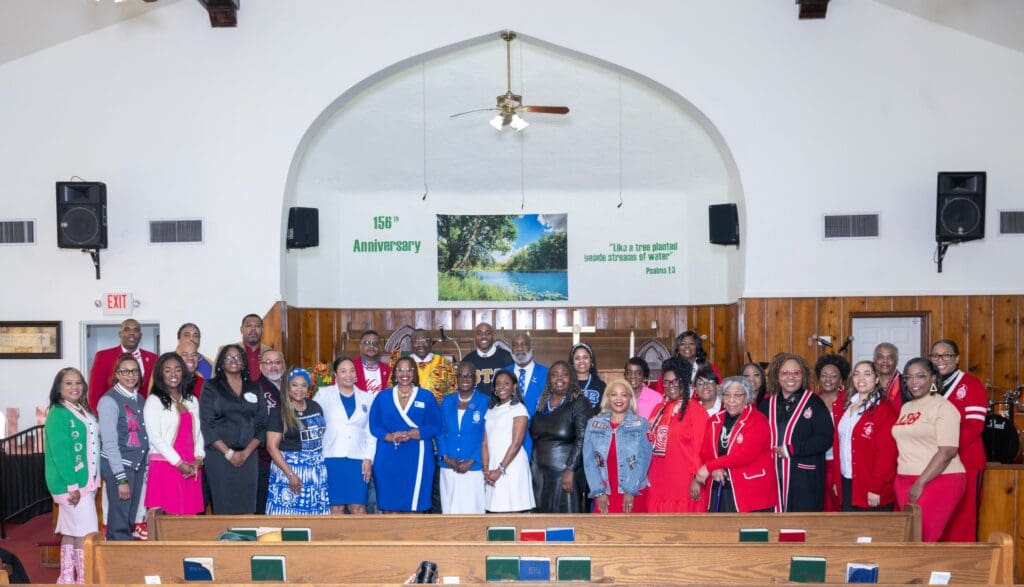
Greek Sunday
Members of Greek organizations were present in worship, service, leadership, and civic engagement. Looking back, I realize how naturally the partnership between the Black Church and Black Greek organizations shaped my understanding of faith in action. This is why, each Black History Month, I look forward to celebrating Greek Sunday at our church in Fort Worth, TX. It is a time when members of historically Black Greek-letter organizations come together from across the metroplex to worship and partner. These organizations were founded in the early twentieth century during segregation, and were built on scholarship, leadership, service, and civic engagement. Like the Black Church, they became structured spaces where identity was strengthened, and community responsibility was cultivated.
When we gather during Black History Month, it is an opportunity to evangelize. We do more than celebrate history and tradition; we commit ourselves to building according to the divine blueprint that shapes leadership and community. We connect and partner with leaders. We encourage civic participation, such as voting, and recognize that faith and public responsibility have walked hand in hand in our history. In this way, Greek Sunday becomes more than a special program; it becomes evangelism in action, where we invite others into a visible expression of faith through service, scholarship, advocacy, and participation in shaping the future.
Growing up in the Black Church, Usher’s Temple CME Church in Fort Valley, GA, shaped my earliest understanding of faith, ministry, and leadership. Before I ever preached a sermon, carried a Bible, or stood behind a pulpit, the church taught me how to stand with dignity, humility, integrity, and love. I will never forget my first Easter speech at about five years old, dressed in my Sunday best, standing before the congregation. I continued year after year until high school. Those sacred moments taught me confidence, conviction, and clarity. That sanctuary became my first architectural classroom, where I learned that faith is not only spoken, but also constructed, lived, and embodied.
Looking back, I see how preparation was a recurring theme in my formation. Preparation meant understanding that strong structures do not happen by coincidence. They are built with intention, patience, and care. These lessons mirrored what the church had been doing all along, quietly shaping character, faith, and resilience in ways that would last a lifetime. Those early worship experiences were built on hope, resilience, and an unshakable belief that God hears the cries of the oppressed.
Evangelism, in that context, was never abstract. It was survival. It was freedom. It was the bold declaration that God was still present, active, and continues to build people. This tradition reminds us that evangelism has always been spiritual, social, and rooted in love and justice. It built trust across divides, created spaces for healing, and called people to see themselves as part of something larger than their circumstances. In this way, evangelism became participation in God’s ongoing construction project, the building of lives, families, and communities.
As we reflect on the divine blueprint of evangelism shaped by the Black Church—relational, resilient, and community, we are reminded that leadership matters. The call to evangelism requires vision grounded in our history and leaders who understand that evangelism must hold weight in real life. This conviction continues to shape my call to serve in evangelism and missions, not as a platform for position, but as a commitment to build according to the blueprint that formed us.
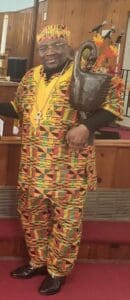 Now that we are at the end of Black History Month, we should not just keep looking backward. We must step forward according to the same divine blueprint that formed our faith, looking back in order to move forward—like the Sankofa bird of Ghana, which teaches us to retrieve what is essential as we press forward. As I reflect on those sacred songs created by enslaved Africans in America, I am reminded that effective witness flows from our lived faith, shared responsibility, and care for God’s people. His blueprint is much bigger than a building. It is a design for the church committed to building what will last for generations.
Let this be a call to faith that moves us beyond Black History Month celebration into action. I pray that you will recommit yourself to this sacred work of evangelism as part of the construction under God’s design. Our ancestors’ songs carried hidden messages of freedom; our lives must now carry visible messages of faith. As they sang their way toward hope, we must build our way toward transformation. Remembering their strength should move us to continue their legacy.
Call to Action:
Strengthen the Spiritual Foundation: Return to prayer, Scripture, and testimonies about the goodness of God. Reintroduce spaces where faith is shared openly. Evangelism requires a strong spiritual foundation.
Rebuild Relationships: Commit to at least one intentional act of relational evangelism. Invite someone to coffee, pray with a neighbor, or reconnect with someone who has drifted away. Real evangelism starts with connecting with people.
Serve Your Community: Identify at least one need in your community and respond. Host a workshop, organize an outreach ministry, or partner with a local organization. This is evangelism made visible.
Practice Intergenerational Evangelism: Create spaces where faith is shared across generations. Give youth and young adults meaningful roles in worship and leadership. Teach them the history and legacy of the Black Church. Evangelism is sustained when each generation intentionally pours into the next.
Move from Celebration to Construction: Do not let Black History Month end in reflection alone. Choose one action your church will take in the next 30 days to build lives, strengthen families, and make evangelism visible in your community.
Reference
Hollingshed, Kenneth L. Outreach Is the Architecture of Evangelism: A Spiritual Blueprint for Building Churches That Reach, Teach, and Transform. WestBow Press, 2026.
Raboteau, Albert J. Slave Religion: The “Invisible Institution” in the Antebellum South. Updated ed. New York: Oxford University Press, 2004.
Cone, James H. The Spirituals and the Blues: An Interpretation. Maryknoll, NY: Orbis Books, 1991.
Southern, Eileen. The Music of Black Americans: A History. 3rd ed. New York: W. W. Norton & Company, 1997.
As Black History Month comes to an end, I recognize that evangelism in the Black Church has always ministered to the whole person—mind, spirit, body, and community. Historically, our faith was never confined to Sunday mornings; it spilled throughout our daily lives. Our ancestors’ survival formed their theology. Their songs became sermons and, at times, coded messages. Some scholars describe this as a form of hidden communication known as coded spirituals, those sacred songs created by enslaved Africans in America. I enjoy spirituals because they are powerful and carry secret messages of freedom. For example, the song “Wade in the Water” was understood to have warned those fleeing slavery to move through water to avoid dogs tracking them:
Wade in the water
Wade in the water, children
Wade in the water
God’s gonna trouble the water
“Follow the Drinking Gourd” is believed to have provided directional guidance toward the North Star. The “drinking gourd” refers to the Big Dipper, a constellation that served as a heavenly map for enslaved people.
Follow the drinking gourd
Follow the drinking gourd
For the old man is a-waiting for to carry you to freedom
If you follow the drinking gourd
“Steal Away” is commonly associated with Wallace Willis, an enslaved man in the 1800s, that was interpreted as a quiet signal for secret meetings in hush harbors or, in some accounts, for escape:
Steal away, steal away
Steal away to Jesus
Steal away, steal away home
I ain’t got long to stay here
Many of these interpretations are commonly shared in cultural history, and historians note that documentation from the slavery era is limited, and some meanings are based on later accounts. In Albert J. Raboteau’s book, Slave Religion: The “Invisible Institution” in the Antebellum South, he explains how enslaved Black believers regularly gathered for worship in the secrecy of their quarters, groves, or hush harbors that established spaces where they could express and shape their faith apart from white enslavers.
Whether believers gathered in hush harbors, praise houses, wooden chapels, or established Black churches, evangelism was embodied as both proclamation and construction grounded in community. It built people when society tried to break them. It built families, courage, leadership, and hope. It created a sense of belonging where the oppressors built walls. Inside these sacred spaces, the gospel was not just spoken, it was lived, sung, prayed, and practiced. Black History Month is a time for us to remember more than historical dates, names, and events. It challenges us to remember our ancestors and their good fight of faith, and to reflect on how our faith was formed, sustained, and handed down through generations, often through the Black Church’s leadership in social justice.
For many of us, our earliest understanding of God, community, leadership, and evangelism was born in the Black Church, which has shaped so many of us. Long before evangelism had programs, metrics, or strategies, evangelism had people standing boldly for freedom and equality. It had a faith that would not die, even under oppression. Evangelism was built according to a divine blueprint grounded in Scripture and should never be reduced to church politics, events, or activities.
With my background as a trained architectural engineer, I think about evangelism in terms of structure—one that cannot be theoretical, performative, or confined to one space. Like our ancestors, evangelism must function in everyday life. Evangelism is the heartbeat of the Church; it is what brings life. Its steady spiritual rhythm should pulse through our daily lives. It must matter, welcome all, and transform lives. In the Black Church, evangelism was never confined to Sunday worship; it extended into the fields and served as a refuge, a strategy, and a sacred space. There, faith laid the foundation, wounded lives were restored, broken systems were confronted, and the community was strengthened from the ground up.
The Black Church has been one of the few institutions where African Americans could safely gather. When our identity was snatched away by the enslavers, the Black Church shaped our identity, strengthened our resilience, and gave us a deep sense of belonging. Even under the pressure of systemic racism and economic disparity, the Black Church did more than offer hope; it restored our dignity and gave us somewhere to stand with boldness.
Even today, leaders are being developed to organize meetings in fellowship halls, plan voter registration drives, and build ministries that support the community. The church reminds us of who we are when society tries to tell us we are less. That same spirit of organized leadership did not stop at the church doors. It showed up in other structured spaces within our community. Although I am not a member of a Greek-letter organization, I grew up in Fort Valley, Georgia, home of Fort Valley State University, an HBCU. It was a town where Black Greek life was woven into the fabric of both the community and the Black Church.
Greek Sunday
Members of Greek organizations were present in worship, service, leadership, and civic engagement. Looking back, I realize how naturally the partnership between the Black Church and Black Greek organizations shaped my understanding of faith in action. This is why, each Black History Month, I look forward to celebrating Greek Sunday at our church in Fort Worth, TX. It is a time when members of historically Black Greek-letter organizations come together from across the metroplex to worship and partner. These organizations were founded in the early twentieth century during segregation, and were built on scholarship, leadership, service, and civic engagement. Like the Black Church, they became structured spaces where identity was strengthened, and community responsibility was cultivated.
When we gather during Black History Month, it is an opportunity to evangelize. We do more than celebrate history and tradition; we commit ourselves to building according to the divine blueprint that shapes leadership and community. We connect and partner with leaders. We encourage civic participation, such as voting, and recognize that faith and public responsibility have walked hand in hand in our history. In this way, Greek Sunday becomes more than a special program; it becomes evangelism in action, where we invite others into a visible expression of faith through service, scholarship, advocacy, and participation in shaping the future.
Growing up in the Black Church, Usher’s Temple CME Church in Fort Valley, GA, shaped my earliest understanding of faith, ministry, and leadership. Before I ever preached a sermon, carried a Bible, or stood behind a pulpit, the church taught me how to stand with dignity, humility, integrity, and love. I will never forget my first Easter speech at about five years old, dressed in my Sunday best, standing before the congregation. I continued year after year until high school. Those sacred moments taught me confidence, conviction, and clarity. That sanctuary became my first architectural classroom, where I learned that faith is not only spoken, but also constructed, lived, and embodied.
Looking back, I see how preparation was a recurring theme in my formation. Preparation meant understanding that strong structures do not happen by coincidence. They are built with intention, patience, and care. These lessons mirrored what the church had been doing all along, quietly shaping character, faith, and resilience in ways that would last a lifetime. Those early worship experiences were built on hope, resilience, and an unshakable belief that God hears the cries of the oppressed.
Evangelism, in that context, was never abstract. It was survival. It was freedom. It was the bold declaration that God was still present, active, and continues to build people. This tradition reminds us that evangelism has always been spiritual, social, and rooted in love and justice. It built trust across divides, created spaces for healing, and called people to see themselves as part of something larger than their circumstances. In this way, evangelism became participation in God’s ongoing construction project, the building of lives, families, and communities.
As we reflect on the divine blueprint of evangelism shaped by the Black Church—relational, resilient, and community, we are reminded that leadership matters. The call to evangelism requires vision grounded in our history and leaders who understand that evangelism must hold weight in real life. This conviction continues to shape my call to serve in evangelism and missions, not as a platform for position, but as a commitment to build according to the blueprint that formed us.
Now that we are at the end of Black History Month, we should not just keep looking backward. We must step forward according to the same divine blueprint that formed our faith, looking back in order to move forward—like the Sankofa bird of Ghana, which teaches us to retrieve what is essential as we press forward. As I reflect on those sacred songs created by enslaved Africans in America, I am reminded that effective witness flows from our lived faith, shared responsibility, and care for God’s people. His blueprint is much bigger than a building. It is a design for the church committed to building what will last for generations.
Let this be a call to faith that moves us beyond Black History Month celebration into action. I pray that you will recommit yourself to this sacred work of evangelism as part of the construction under God’s design. Our ancestors’ songs carried hidden messages of freedom; our lives must now carry visible messages of faith. As they sang their way toward hope, we must build our way toward transformation. Remembering their strength should move us to continue their legacy.
Call to Action:
Strengthen the Spiritual Foundation: Return to prayer, Scripture, and testimonies about the goodness of God. Reintroduce spaces where faith is shared openly. Evangelism requires a strong spiritual foundation.
Rebuild Relationships: Commit to at least one intentional act of relational evangelism. Invite someone to coffee, pray with a neighbor, or reconnect with someone who has drifted away. Real evangelism starts with connecting with people.
Serve Your Community: Identify at least one need in your community and respond. Host a workshop, organize an outreach ministry, or partner with a local organization. This is evangelism made visible.
Practice Intergenerational Evangelism: Create spaces where faith is shared across generations. Give youth and young adults meaningful roles in worship and leadership. Teach them the history and legacy of the Black Church. Evangelism is sustained when each generation intentionally pours into the next.
Move from Celebration to Construction: Do not let Black History Month end in reflection alone. Choose one action your church will take in the next 30 days to build lives, strengthen families, and make evangelism visible in your community.
Reference
Hollingshed, Kenneth L. Outreach Is the Architecture of Evangelism: A Spiritual Blueprint for Building Churches That Reach, Teach, and Transform. WestBow Press, 2026.
Raboteau, Albert J. Slave Religion: The “Invisible Institution” in the Antebellum South. Updated ed. New York: Oxford University Press, 2004.
Cone, James H. The Spirituals and the Blues: An Interpretation. Maryknoll, NY: Orbis Books, 1991.
Southern, Eileen. The Music of Black Americans: A History. 3rd ed. New York: W. W. Norton & Company, 1997.